Ant community shifts over 60 years in a montane ecosystem
|
As temperature changes, organisms may shift their ranges in response. Ectotherms, specifically ants, are useful organisms to study temperature variability due to their sensitivity to environmental conditions. Historical studies on distributions when paired with contemporary collections and environmental data can provide a unique opportunity to examine how climate change has affected community composition and predict future responses.
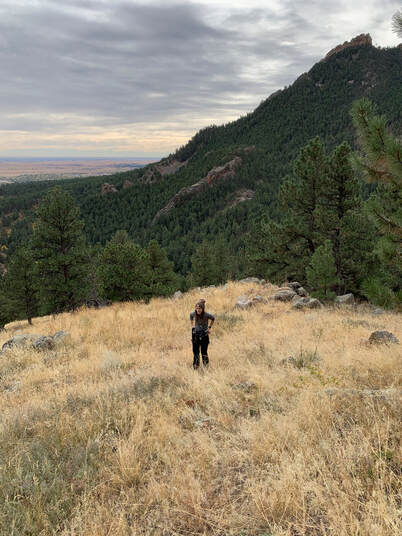
Browne and Gregg (1969) examined the distributions of ants in Gregory Canyon near Boulder, CO in 1957. In 2021 and 2022 we resampled Browne and Gregg's study to determine if the community composition of ants had shifted locally and if species persisted at sites where they had been documented historically. We found high community turnover and biotic homogenization. We are currently looking at the potential influence of tree cover and temperature to explain the changes we see in the community. |